
Portable power station for camper vans
4 de julio de 2021
When you set about converting a van into a campervan, one of the aspects you need to look at and work on is the electrical system. Many of the devices we carry need to be charged to work, especially in this day and age when we don’t deprive ourselves of anything and are surrounded by technology (smartphones, cameras, drones…).
Table of contents
- What is a portable power station?
- How do you charge a portable power station?
- What are the benefits of a portable power station?
- What is the best portable power station?
- Bluetti PowerOak AC50s Battery
- SUAOKI G500 Portable Solar Generator
- GoalZero Yeti 500x Battery
- EcoFlow RIVER Pro Battery
- EcoFlow Delta Battery
- How much does a traditional second battery system for your campervan cost?
The traditional way of powering the electronic devices we carry in a campervan is to use a second battery or auxiliary battery. This requires various components, such as chargers, inverters and regulators, along with a somewhat complex electrical installation, and the cost is, shall we say, quite high.
Fortunately, things are evolving, and so-called portable power stations are becoming increasingly popular these days.
What is a portable power station?
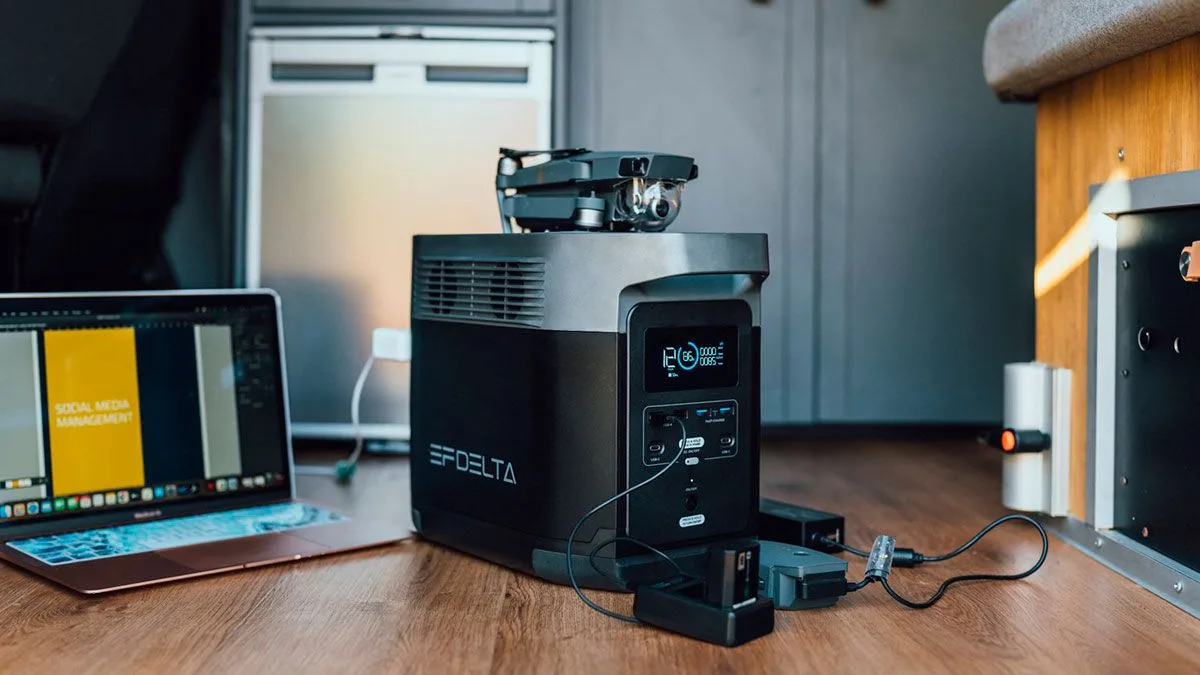
A portable power station is a compact device that incorporates a battery, an inverter, a charger and a solar regulator, and features multiple input and output ports.
These systems contain a lithium battery and are generally quite lightweight.
How do you charge a portable power station?
Generally speaking, there are three ways to charge a portable power station:
- By plugging it into a 220V mains socket at home, on a campsite, etc.
- Via the 12V cigarette lighter socket in a car or van
- By connecting a solar panel
- Some allow charging via the USB-C PD (Power Delivery) port
What is the advantage of a portable power station?
The advantage of these devices over the electrical installation typically fitted in a campervan is:
- Space required
- Portability
- No need for complex installations
- No type approval required
What is the best portable power station?
Let’s now take a look at a selection of models from the leading brands on the market. They are listed in order of capacity, from lowest to highest.
Bluetti PowerOak AC50s Battery
We’ll start with the Bluetti PowerOak AC50s, which is available on Amazon. It’s a compact power bank, making it highly portable. It has a capacity of 500 Wh and features a good number of ports. One feature that sets it apart from its competitors is its wireless charging pad.
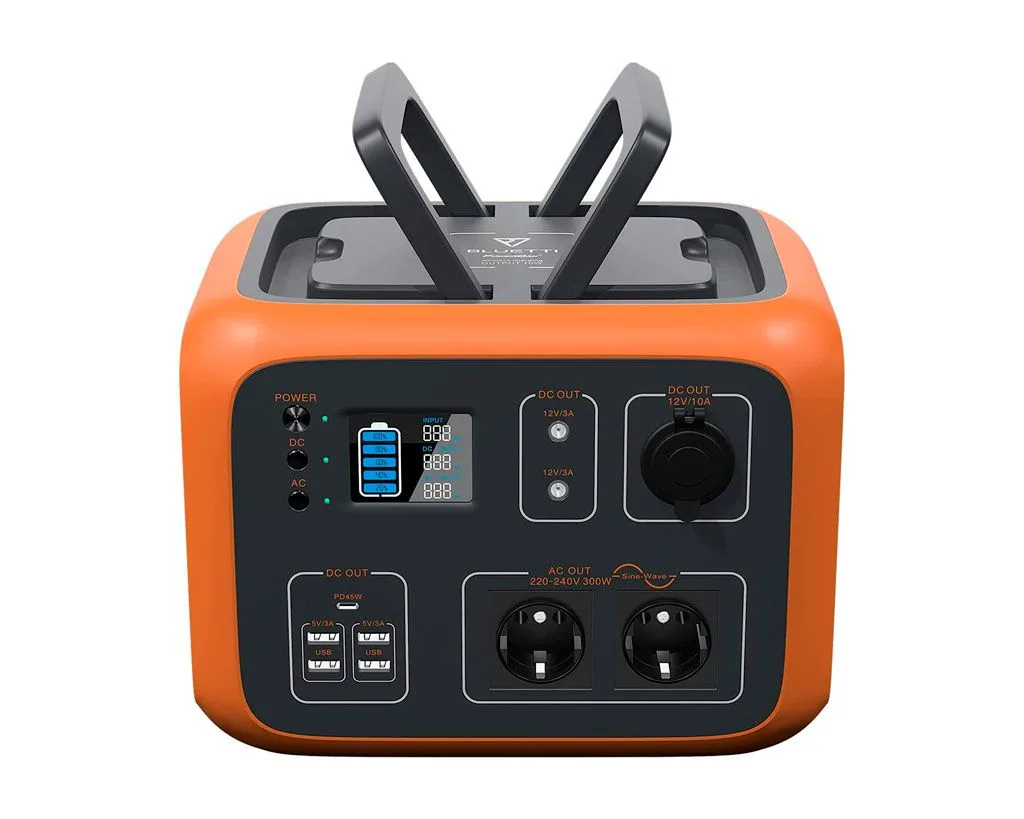
PowerOak Bluetti AC50s Specifications
| Capacity | 500 Wh (11.1 V) |
| AC input: | 300 W |
| Maximum solar input: | 120W |
| AC output: | 2 x 300W sockets (450W peak) |
| Waveform: | Pure sine wave (international version) |
| USB output: | 4 x 3 A ports |
| Wireless output: | 1 port, 15 W max |
| USB-C PD output: | 1 port, 3 A, 45 W max |
| Weight: | 6.2 kg |
| Cycle life: | 1,000 cycles |
| Price: | 539.99 euros |
How long does it take to charge the Bluetti PowerOak AC50s?
| AC charging | 5.5 hours | |
| Solar charging | 4–5 hours | |
| Cigarette lighter socket charging | 15 hours |
SUAOKI G500 Portable Solar Generator
Next up is the Suaoki G500. This device is also available on Amazon and has a capacity of 500Wh. Its specifications are very similar to the previous model we looked at, with slight variations, and it’s priced very similarly.
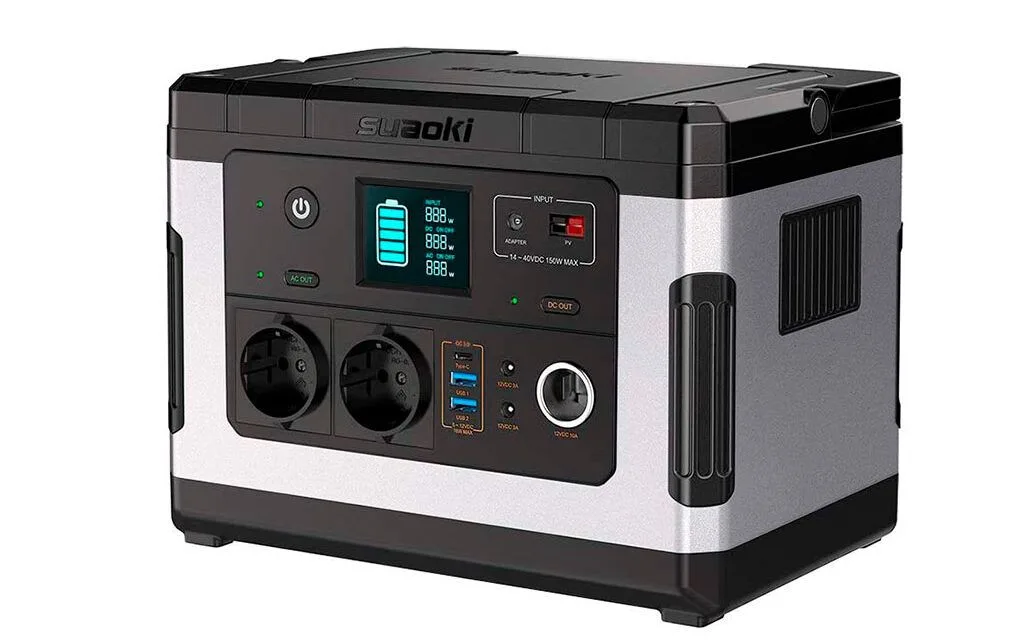
SUAOKI G500 Specifications
| Capacity | 500 Wh (11.1V) |
| AC input: | 500W |
| Maximum solar input: | 150W |
| AC output: | 2 x 300W sockets (600W peak) |
| Waveform: | Pure sine wave |
| USB output: | 2 ports. 2.4 A, 18 W max. |
| USB-C output: | 1 port. 3 A, 18 W max. |
| Weight: | 6.7 kg. |
| Cycle life: | N/A |
| Price: | 499.99 euros |
How long does it take to charge the Suaoki G500?
| AC charging | 8–10 hours | |
| Solar charging | 3–4 hours | |
| Cigarette lighter socket charging | 12 hours |
GoalZero Yeti 500x battery
GoalZero is a US brand strongly focused on providing electrical equipment to areas affected by natural disasters or impoverished regions without access to the mains electricity supply.
For this review, I wanted to feature a 500Wh device, just like the previous two. A standout feature of the Yeti 500x is its compact size, which makes it the lightest unit of those reviewed.
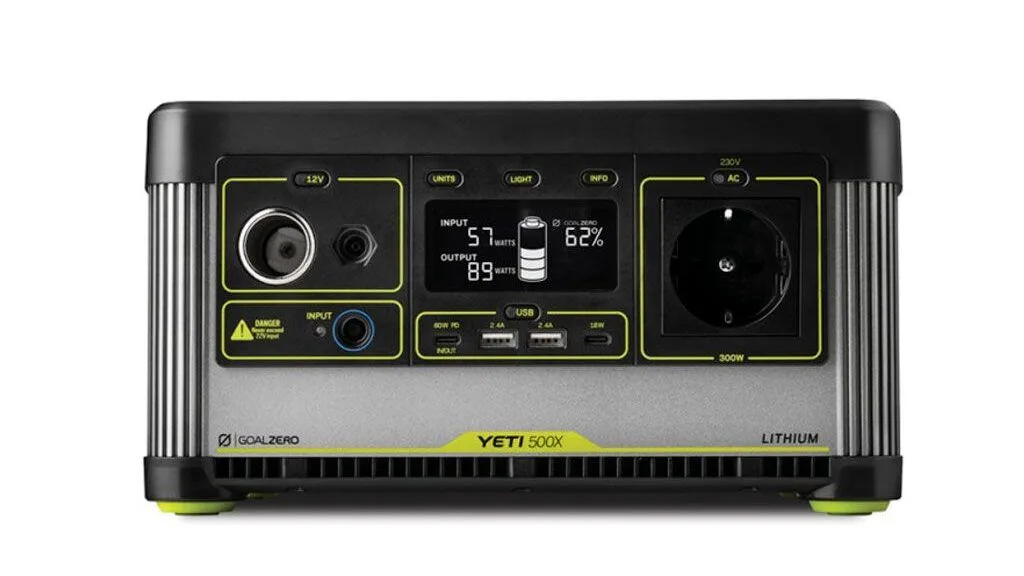
GoalZero Yeti 500x Specifications
| Capacity | 505 Wh (10.8 V) |
| AC input: | 500W |
| Maximum solar input: | 120W |
| AC output: | 1 x 300W socket (1200W peak) |
| Waveform: | Pure sine wave (international version) |
| USB output: | 2 ports. 2.4 A, 12 W max. |
| USB-C output: | 1 port. 3 A, 18 W max. |
| USB-C PD output: | 1 port. 3 A, 60 W max |
| Weight: | 5.85 kg. |
| Cycle life: | 500 cycles at 80% capacity |
| Price: | €799.99 |
How long does it take to charge the GoalZero Yeti 500x?
| AC charging | 9 hours | |
| Solar charging | 6 hours | |
| 60W USB-C charging | 9 hours |
EcoFlow RIVER Pro Battery
With the EcoFlow River Pro, we’re taking a leap forward in terms of capacity, as the previous models were 500Wh and here we’re already talking about 720Wh.
It’s a product that looks very promising in terms of its build quality, specifications and very competitive price.
It also features a patented technology called X-Stream, which ensures an 80% charge in 1 hour.
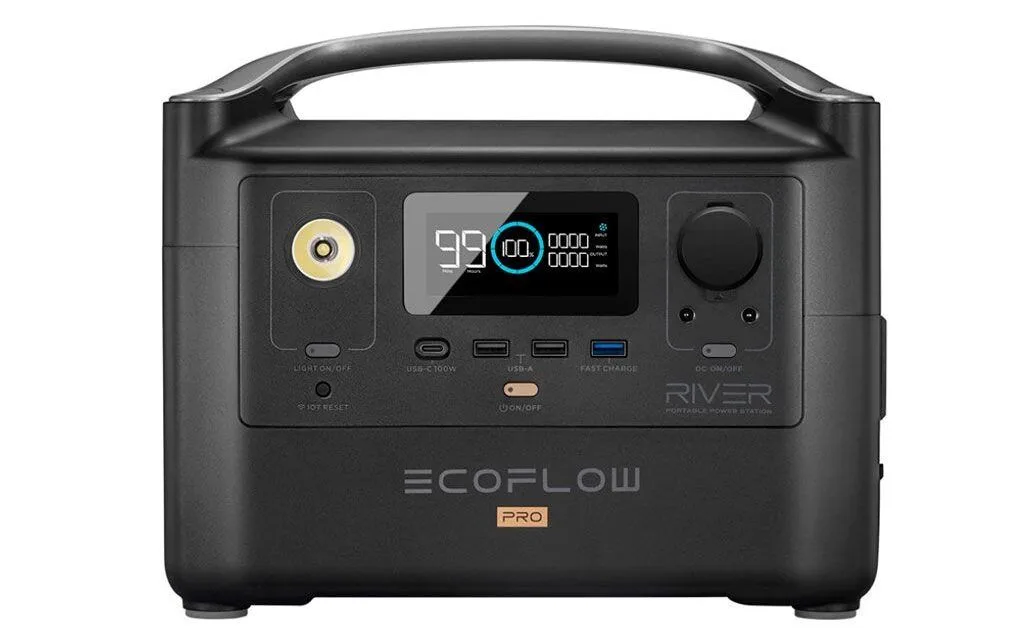
EcoFlow RIVER Pro Specifications
| Capacity | 720Wh (28.8V) |
| AC input: | 660W |
| Maximum solar input: | 200W |
| AC output: | 2 sockets, 600W (peak 1,800W) |
| Waveform: | Pure sine wave |
| USB output: | 2 ports. 2.4 A, 12 W max. |
| Fast-charging USB output: | 1 port. 2.4 A, 28 W max. |
| USB-C output: | 1 port. 5 A, 100 W max |
| Weight: | 7.6 kg. |
| Cycle life: | 800 cycles at 80% capacity |
| Price: | 699 euros |
How long does it take to charge the Ecoflow River Pro?
| AC charging | 1.6 hours | |
| Solar charging | 4–8 hours | |
| Cigarette lighter socket charging | 8 hours |
Another feature worth highlighting is the option to add an extra battery to this system. This doubles the capacity from 720Wh to 1440Wh.

Ecoflow Delta battery
Having looked at the Ecoflow River Pro, we’ve also reviewed the brand’s top-of-the-range model. This is the Ecoflow Delta, with its 1,260Wh capacity. We’re now talking about something on a much larger scale, as this unit allows you to power electronic devices up to 1,800W, with peak power of 3,300W.
Obviously, greater capacity means more weight (14 kilos) and a higher price (around 1,400 euros).
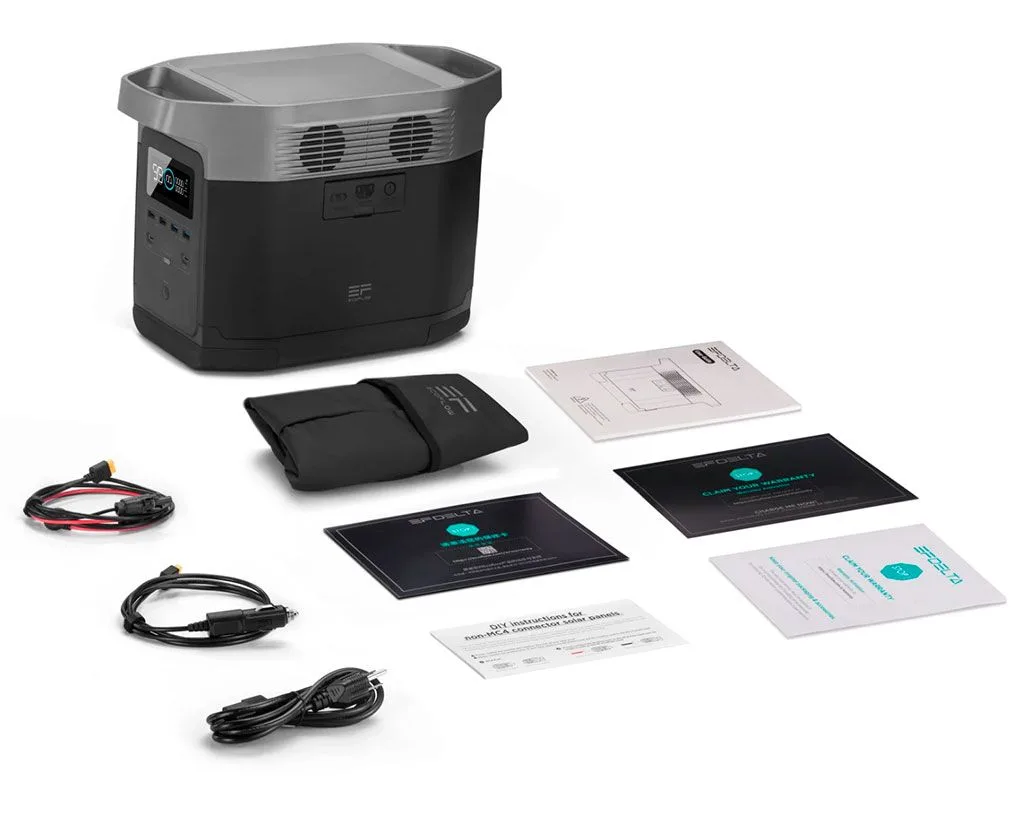
EcoFlow Delta Specifications
| Capacity | 1,260 Wh (50.4 V) |
| AC input: | 1,200 W |
| Maximum solar input: | 400W |
| AC output: | 4 sockets 1800W (3300W peak) |
| USB output: | 2 ports. 2.4 A, 12 W max. |
| Fast-charging USB output: | 2 ports. 2.4 A, 28 W max. |
| USB-C output: | 2 ports. 3 A, 60 W max |
| Weight: | 14 kg. |
| Cycle life: | 800 cycles at 80% capacity |
| Price: | 1,399 euros |
How long does it take to charge the EcoFlow Delta?
| AC charging | <2 hours | |
| Solar charging | 4–8 hours | |
| Cigarette lighter socket charging | 9–10 hours |
Here’s a comparison between the EcoFlow Delta Max and the Bluetti PowerOak AC200P
How much does a traditional second battery system for your campervan cost?
Now that we’ve looked at capacities and different products with their respective prices, let’s compare them with a traditional auxiliary battery system.
Assuming you install an AGM or gel battery, a pure sine wave inverter, a charger, a solar regulator, relays, fuses, electrical components…plus installation and type approval, the cost can start at around 600 euros and may even exceed 1,000 euros.
Therefore, I think these systems are excellent if you don’t have very high electricity consumption and if you don’t want to complicate your life. The fact that it’s portable and that you can take it anywhere at any time or install it in another van is a definite plus.
Definitely an option worth considering.