
Van roof tent
18 de junio de 2021
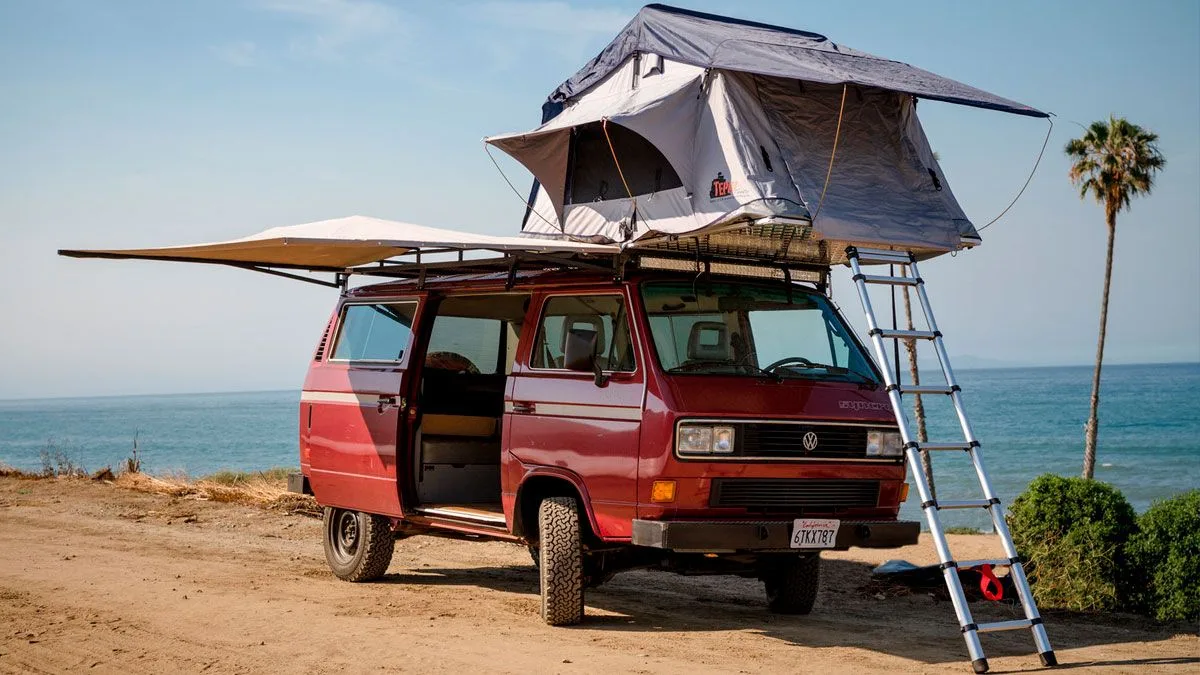
One of the things I’m thinking about is fitting a pop-up roof to the van. As you’ll know, it’s an accessory that gives you extra space, especially for sleeping.
So why not fit a pop-up roof? Well, the thing is, I did buy one at the time, but my van comes with a sliding roof as standard. When that sliding roof opens, it tucks away underneath the bodywork. So the roof is different, and cutting it to size and fitting it properly would have been a right faff. I didn’t want any more complications, so I ended up selling it and looking into this option instead.
Roof tents, as the name suggests, are similar to traditional tents and are mounted on the roof of the vehicle. You usually need either a frame on top of the roof or roof bars to fit them. What’s more, many of them come with an aluminium ladder for access.
Types of roof tent
There are various types of roof tents available on the market.
- Rigid roof tents
- Soft-sided roof tents
These, in turn, can be
- Horizontal opening
- Angular opening
- Hinged, book-style opening
What features should I look for in a roof tent?
The features I value would be:
- That it isn’t particularly bulky
- It should open easily
- It should allow you to store a few things inside, such as sleeping bags or pillows.
- It shouldn’t exceed the vehicle’s dimensions
- Costing around 2,000 euros at most
With the features I’ve mentioned in mind, here are the options I’ve come across.
Decathlon Camper Van 500 roof tent
This particular model is called the Camper Van 500 Fresh&Black roof tent for 2 people.
To be honest, it looks good and is very well priced. The problem I see with it is that, ultimately, it doesn’t meet the criteria I value, as it must be a bit of a faff to put up every time. Plus, you have to carry it inside the van.
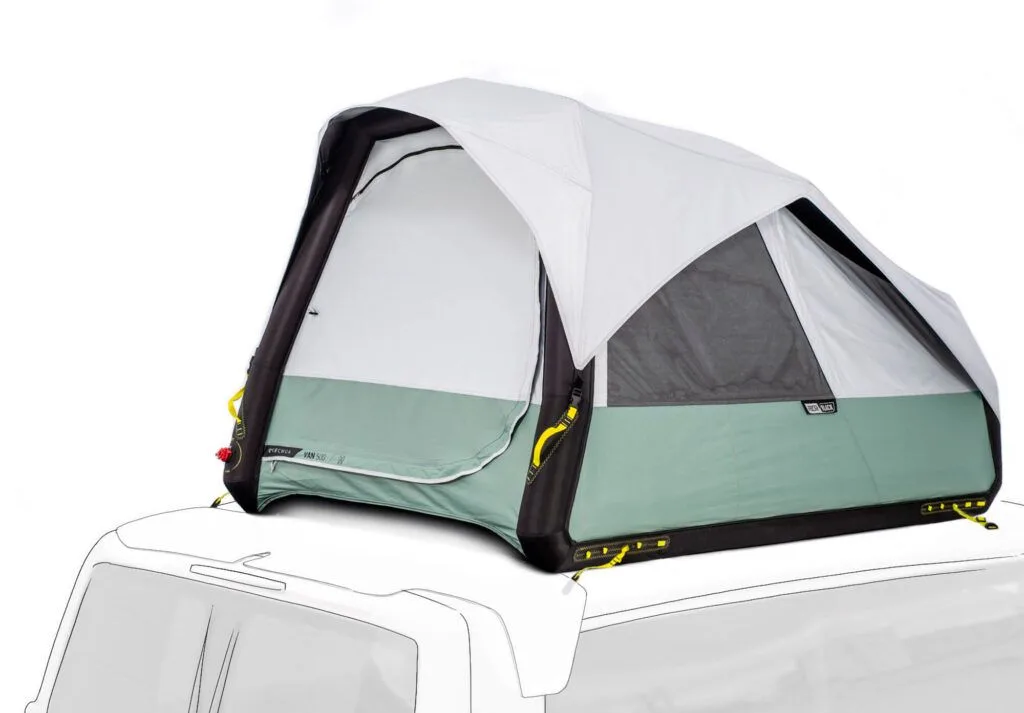
Price: 549.99 euros
James Baroud Space roof tent
Without a doubt one of the highest-quality options on the market. James Baroud roof tents are a brilliant choice. Made in Portugal, they have three models that suit me: Space, Extreme and Discovery.
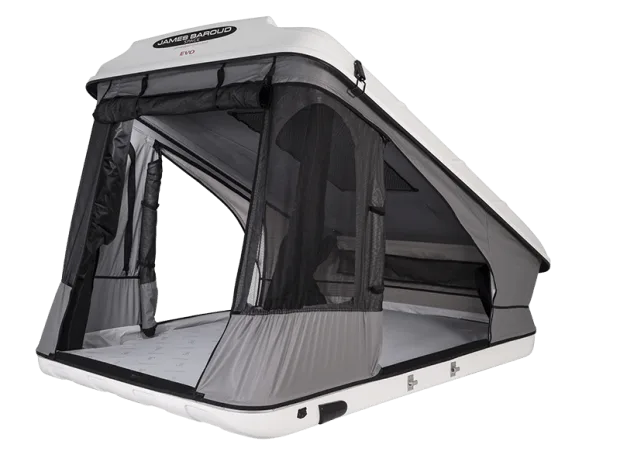
The tent pitches very quickly – in just 10 seconds and, with the help of some shock absorbers, it’s ready to go. Packing it away is also quick and easy; in a minute you’re ready to hit the road again.
They’re made of fibreglass and feature ventilation and lighting, panoramic windows with mosquito nets, and an aluminium ladder.
The problem with this one is that it’s quite expensive.
Price: from around 2,300 euros
Autohome Columbus roof tent
Another excellent brand of roof tents, this time manufactured in Italy. The Autohome brand also has models similar to those by James Baroud. Made from fibreglass, they combine lightness with strength. They feature a high-end fabric called Airtex®, produced in Germany, which is water-resistant.
It is so similar that the price also soars to over 2,000 euros.
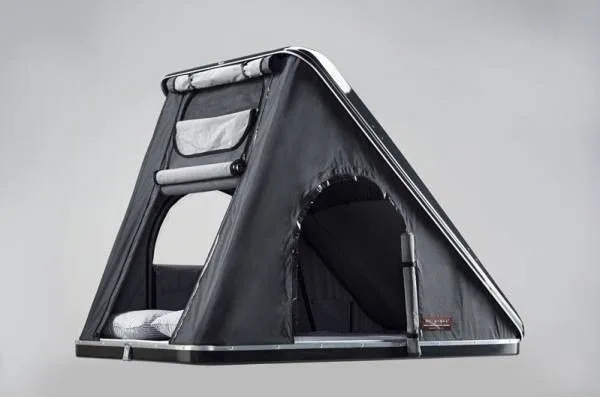
Price: from 2,300 euros
Bullface Agadir roof tent
A step down in terms of quality – and therefore price – are the Bullface Agadir models.
Same configuration as the Autohome or James Baroud, with side opening and a rigid construction made from ABS material. If I’m not mistaken, this is a Chinese brand.
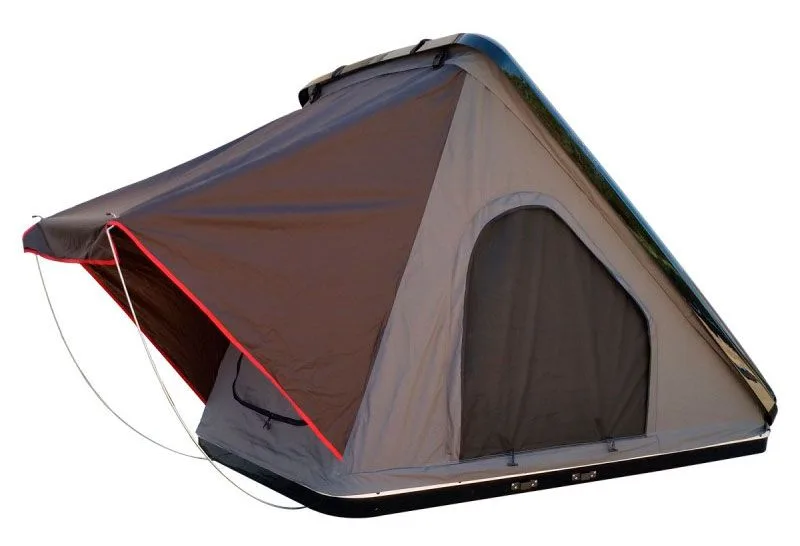
Price: approx. 1,300 euros
Wildland Fisterra roof tent
My latest discovery is the Wildland brand, which has a ‘book-style’ model called the Fisterra.
It weighs around 60kg and opens in about 30 seconds thanks to four quick-release fasteners and its gas struts. It includes two roof bars with a load capacity of 75kg, some pockets for storing shoes, an aluminium ladder and is only 18cm thick (without the bars).
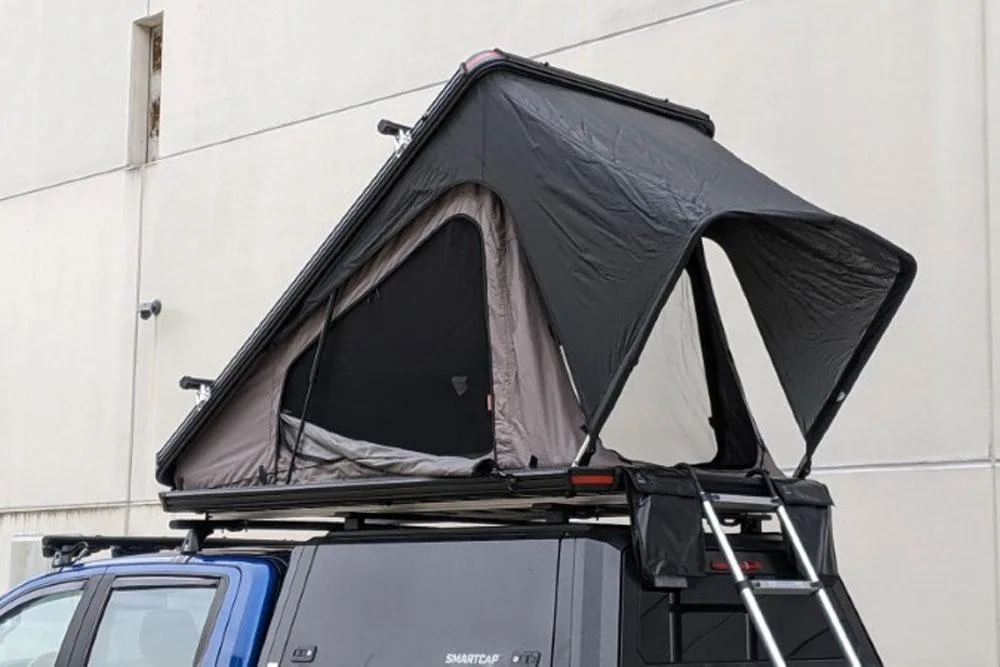
Price: approx. 1,960 euros.