
Comparison of VW T3 Syncro petrol engines
27 de febrero de 2018
Update: Every type-approval body I’ve consulted has told me that it is IMPOSSIBLE to type-approve a Subaru engine for a Volkswagen T3. The problem is that you have to fit the exhaust system for the engine you want to install. The Subaru engine is mounted at the front of the vehicle in question, whereas, as you’ll know, in the Syncro it’s at the rear. This makes it impossible to ‘adapt’ that exhaust system to the van. END.
I’m currently in the process of removing the engine from the T3 Syncro. For those who don’t know, I’ve had a 2.1 DJ engine producing 112 cv fitted.
My plan is to remove it, assess its condition and get to work restoring it to peak condition.
But in the meantime, I’ve been looking into alternatives when it comes to petrol engines. The thing is, the 2.1 DJ is a bit of a gas guzzler (around 12 litres combined fuel consumption), so it’s worth exploring other options before I commit to investing money in it.
Specifications of the 2.1 DJ engine
The first step is to understand the specifications of the engine I already have. There are three key factors to consider when making a decision: horsepower, torque and fuel consumption. I’ve summarised them in a table:
| ENGINE | CV | TORQUE | AVERAGE FUEL CONSUMPTION | TYPE |
| 2.1 DJ | 112 | 174 Nm | 13 l/100 km | Boxer |
Alternatives to the 2.1 DJ
Of the petrol engines fitted as standard on the T3 Syncro, the 2.1 DJ delivers the highest power and torque. We therefore need to look for replacements from other models within the VAG group or from other makes.
Subaru petrol engines
The most widespread and well-known engine swaps are those from Subaru.
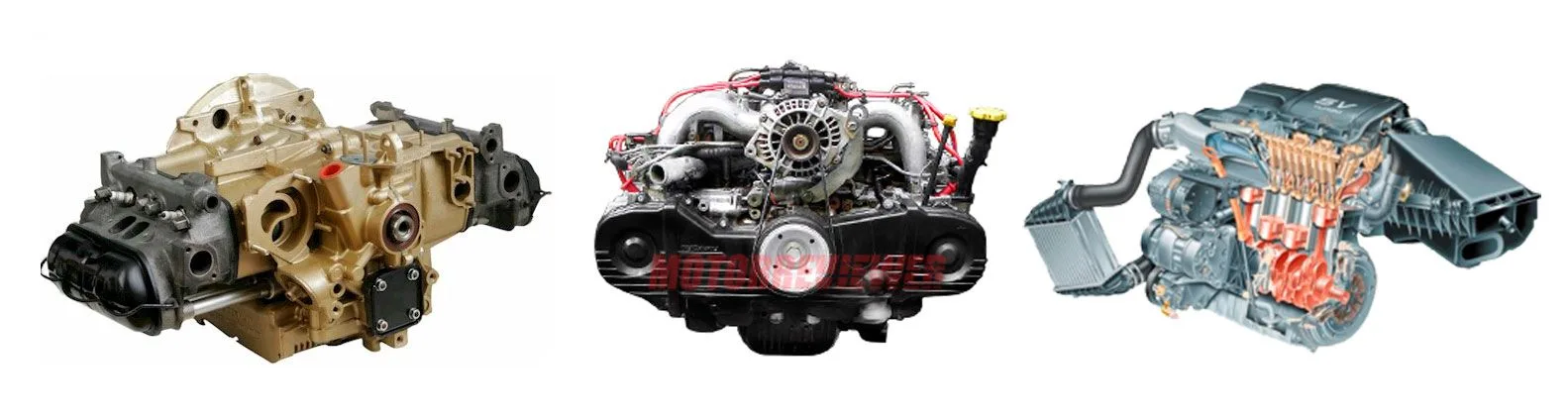
Subaru is one of the few makes that fit boxer engines like the one in my T3 Syncro. Specifically, conversions are carried out using the EJ22 and EJ25 engines fitted to the Legacy, Impreza and Outback, and also to the Forester in the case of the EJ25.
| ENGINE | CV | TORQUE | AVERAGE FUEL CONSUMPTION | TYPE |
| Subaru EJ22 | 128 | 190 Nm | 9 l/100 km | SOHC boxer |
| Subaru EJ22 | 131 | 193 N·m | 10 l/100 km | SOHC Boxer |
| Subaru EJ25 | 150 | 221 Nm | 11 l/100 km | DOHC Boxer |
In my view, the ideal choice is the EJ22 with 131 cv. After all, we’d gain 19 cv and 19 nm of torque, and it offers lower fuel consumption whilst being a boxer engine. Furthermore, these are non-interference engines. This means that, should the timing chain break, the valves would not collide with one another, as they never pass through the area occupied by other valves.
Advantages of Subaru engines:
- We gain in horsepower and torque, whilst reducing fuel consumption.
- There’s plenty of information available (especially in the US)
- We’re still fitting a boxer engine
- There are various conversion kits available
- Buying a Subaru with these engines is quite affordable. You should be aware that it’s best to buy a complete car, as you’ll need the electrical system and various other parts in addition to the engine.
So far, it’s all advantages, but like everything else, there are also drawbacks (and quite a few of them):
- In Spain, getting an engine from another make type-approved is very complicated. Whilst it’s true that there are type-approved Nissan Patrols with BMW engines or classic Minis with Suzuki Swift engines.
- Conversion kits are expensive and most are made in the US, so you’ll need to factor in VAT and import duties.
Petrol engines from the VAG Group
Another option to consider is engines from the VAG Group. Here, we’re working on the assumption that we’ve eliminated most of the problems regarding type-approval, as there’s greater flexibility when it comes to fitting them. Which VAG Group engines can we fit?
| ENGINE | CV | TORQUE | AVERAGE FUEL CONSUMPTION | MODEL |
| Audi A3 1.8 20v | 125 | 173 Nm | 7.8 l/100 km | In-line |
| Audi A3 1.8T 20v | 150 | 210 Nm | 7.8 l/100 km | In-line |
| VW Golf 2.0 8v | 115 | 170 Nm | 7.9 l/100 km | In-line |
| VW Golf 2.0 16v | 150 | 180 Nm | 10.8 l/100 km | In-line |
Advantages:
- These engines offer fairly moderate combined fuel consumption. We’d see a significant improvement compared to the 2.1 DJ’s 12 litres per 100 km.
Disadvantages:
- We lose out on the boxer engine, which has its own charm.
- There is less information available than for Subaru engines
Incidentally, the T3 Syncro’s gearbox is designed to handle around 190–200 Nm.
What about you – do you have any more information? What would you recommend?